
Efficient grain handling requires more than sufficient storage space. Grain receiving, preliminary cleaning, drying, conveying, and storage must work together to support an organized and reliable operation.
For grain storage facilities, agricultural businesses, and grain processing plants, integrating steel silos with grain drying and conveying equipment can provide a practical way to coordinate these processes.
This guide explains the main components of an integrated grain handling system and the key factors to consider when planning a new facility.
1. Why Integrate Steel Silos with Grain Processing Equipment?
Grain storage and grain processing are closely connected.
Incoming grain may contain impurities or have a moisture content that requires adjustment before storage. After cleaning and drying, grain must be transported to the appropriate silo or downstream process.
If equipment is not properly coordinated, material transfer can become a bottleneck even when sufficient storage capacity is available.
An integrated system brings together the major equipment components and considers their capacities, locations, and operating sequences during the planning stage.
2. The Main Components of a Grain Storage and Handling System
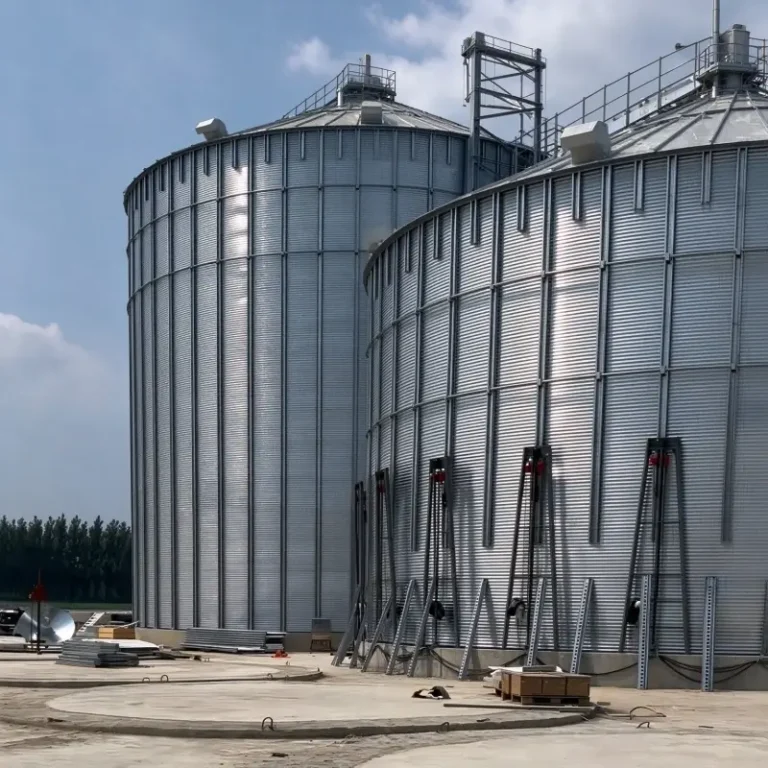
Steel Grain Silos
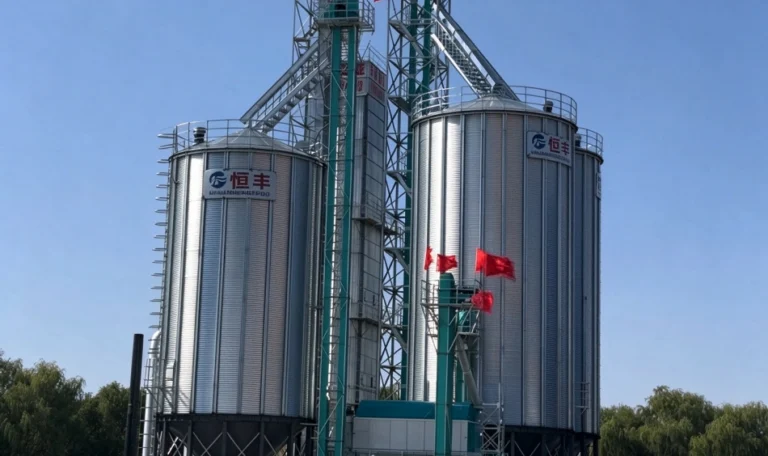
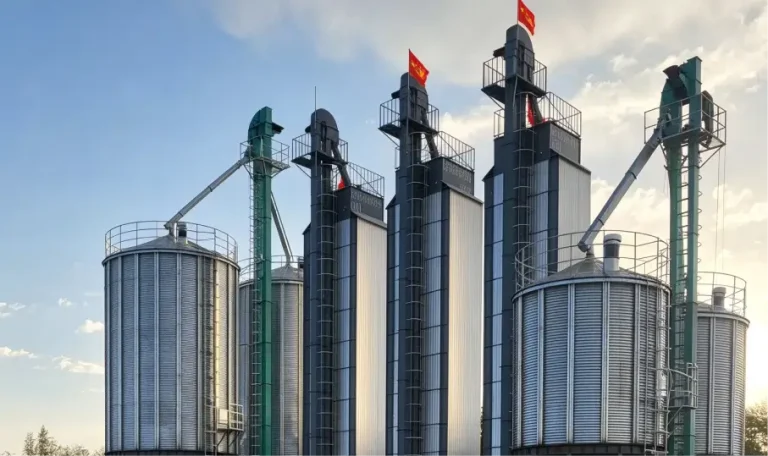
Steel silos provide dedicated storage space for grain.
The required capacity depends on daily intake, seasonal supply, storage duration, grain type, bulk density, and inventory management requirements.
Using multiple silos with different capacities can help operators allocate storage space more flexibly.
Hydraulic Truck Unloading Platform (Truck Tippler)
A hydraulic truck unloading platform is used to unload grain from compatible trucks at the receiving stage of a grain handling facility.
By tilting the truck platform, the system allows grain to discharge toward a designated receiving hopper, reducing the need for manual unloading. The grain can then be transferred to the pre-cleaner, drying equipment, or other process stages according to the facility layout.
Key considerations when selecting a truck tippler include:
- Maximum truck weight and platform load capacity.
- Compatible truck dimensions and wheelbase.
- Platform size and lifting angle.
- Hydraulic system performance and safety interlocks.
- Receiving hopper design and downstream conveying capacity.
- Foundation requirements, drainage, and installation space.
The truck unloading platform should be matched to the receiving throughput and the capacities of downstream equipment to help prevent bottlenecks during peak grain intake.
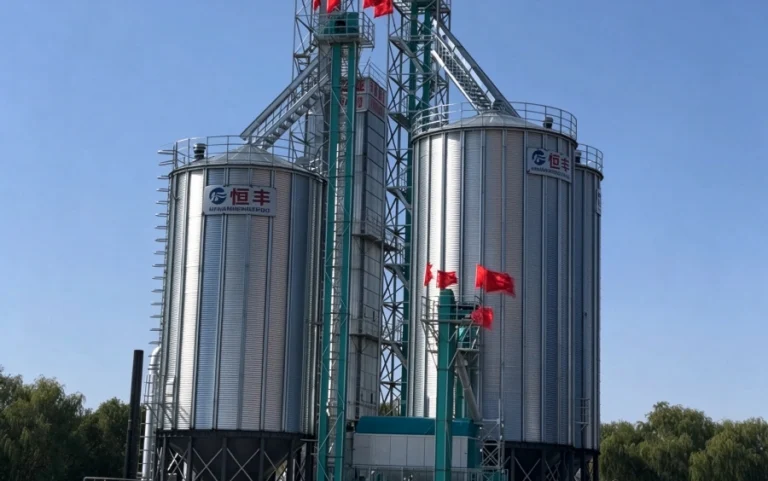
In the 2025 Gansu grain storage project, the truck unloading platform forms part of the overall grain receiving and handling configuration, alongside the cylindrical grain pre-cleaner, drying tower, bucket elevators, belt conveyors, scraper conveyors, and steel silos.
Cylindrical Grain Pre-Cleaner
A cylindrical grain pre-cleaner removes suitable impurities from incoming grain before subsequent processing.
Pre-cleaning can help reduce the amount of unwanted material entering downstream equipment. The appropriate cleaning equipment should be selected
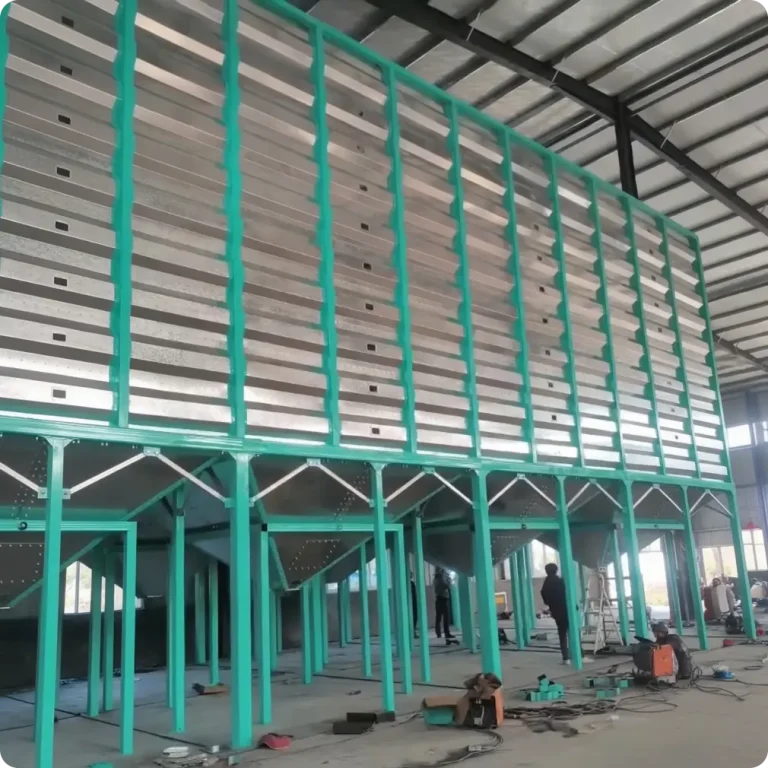
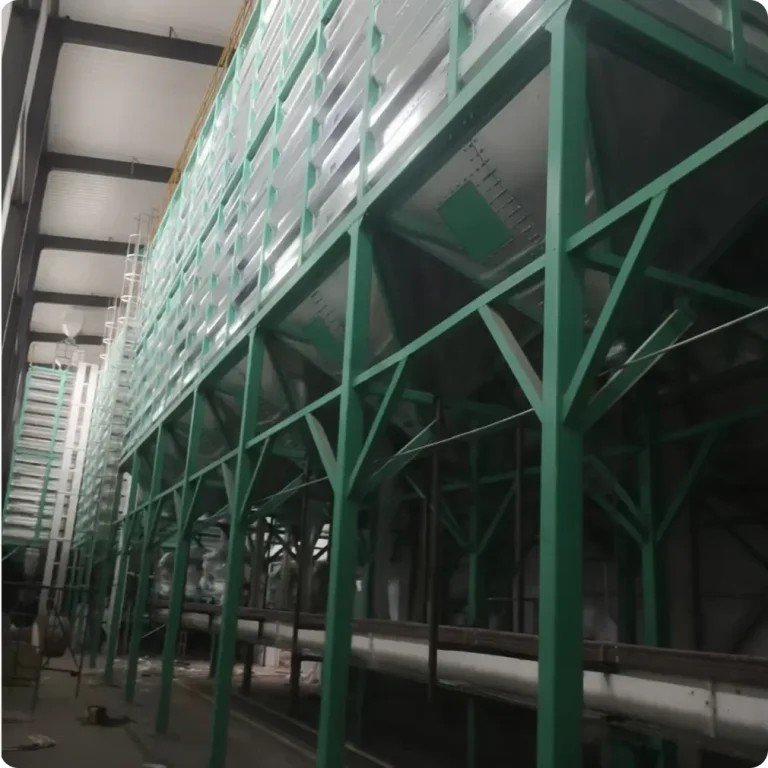
Grain Drying Tower
A grain drying tower reduces grain moisture when drying is required.
Drying performance depends on the initial moisture content, target moisture content, grain type, ambient conditions, airflow, and operating temperature.
Excessive drying temperatures or unsuitable operating conditions may affect grain quality, so the drying process should be configured for the specific grain and intended use.
Bucket Elevators
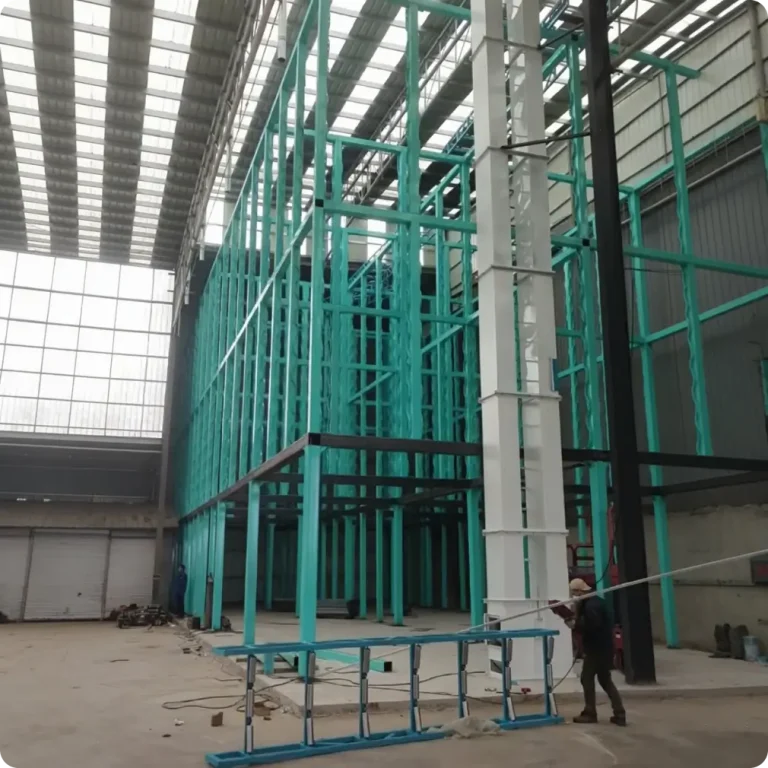
Bucket elevators move grain vertically between different equipment levels.
They are commonly used where grain needs to be lifted from receiving equipment to a cleaner, drying tower, distribution point, or silo inlet.
Elevator capacity should be matched to the required system throughput and the operating characteristics of the conveyed grain.
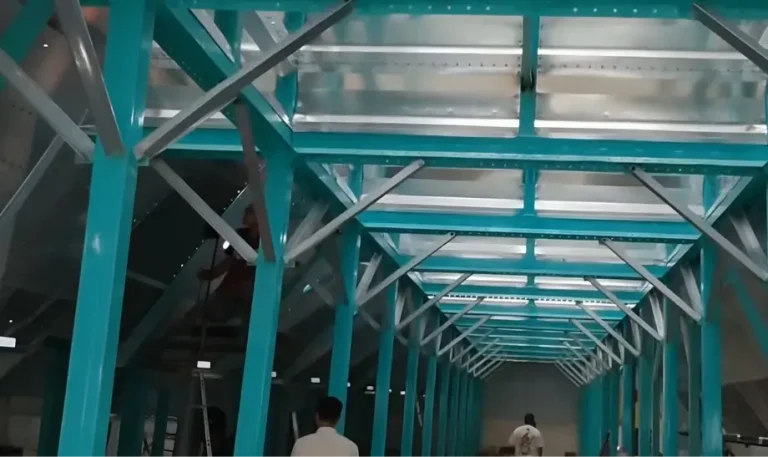
Belt Conveyors
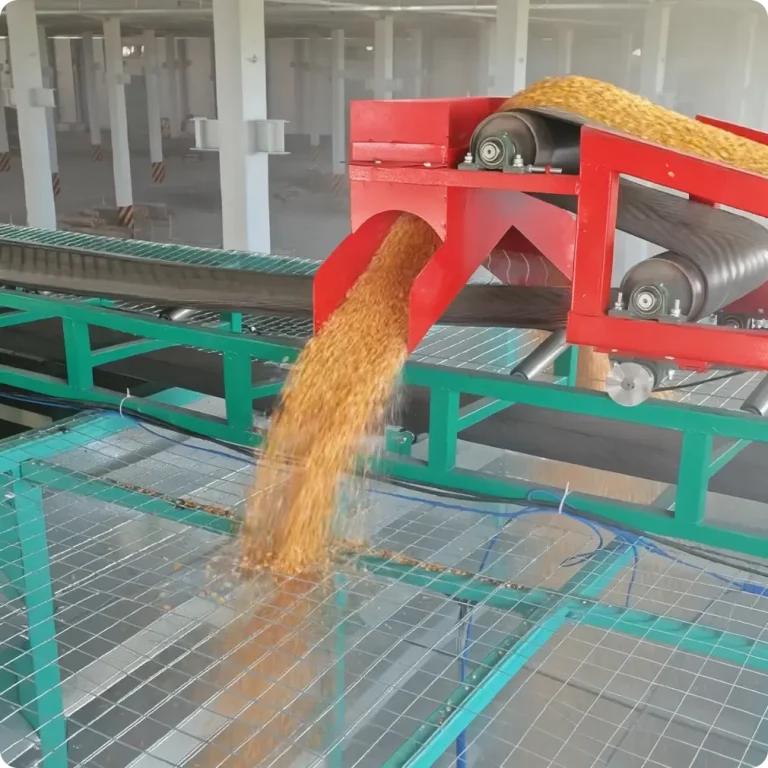
Belt conveyors transport grain horizontally or along suitable inclined routes.
They can connect receiving points, processing equipment, transfer points, and storage areas, depending on the layout.
The conveyor length, belt speed, loading arrangement, and rated capacity should be considered during system design.
Scraper Conveyors
Scraper conveyors transport bulk grain through an enclosed or suitably configured conveying path.
They can be used for grain transfer between selected process points, depending on the layout and equipment specifications.
The selection should account for grain characteristics, conveying distance, required throughput, and maintenance access.
3. How to Plan the Equipment Process Flow
A typical grain handling process may include the following stages:
- Grain receiving: Incoming grain is unloaded into a receiving hopper or designated intake point.
- Pre-cleaning: Suitable impurities are removed using the selected cleaning equipment.
- Drying: Grain requiring moisture reduction is processed through the grain drying tower.
- Conveying: Elevators and conveyors transfer grain between the relevant equipment.
- Storage: Grain is directed into the designated steel silo.
- Discharge: Stored grain is transferred to the next process or dispatch point as required.
This is an illustrative process sequence rather than a confirmed operating sequence for every facility. Actual layouts may differ according to grain characteristics, equipment configuration, and whether grain requires drying.
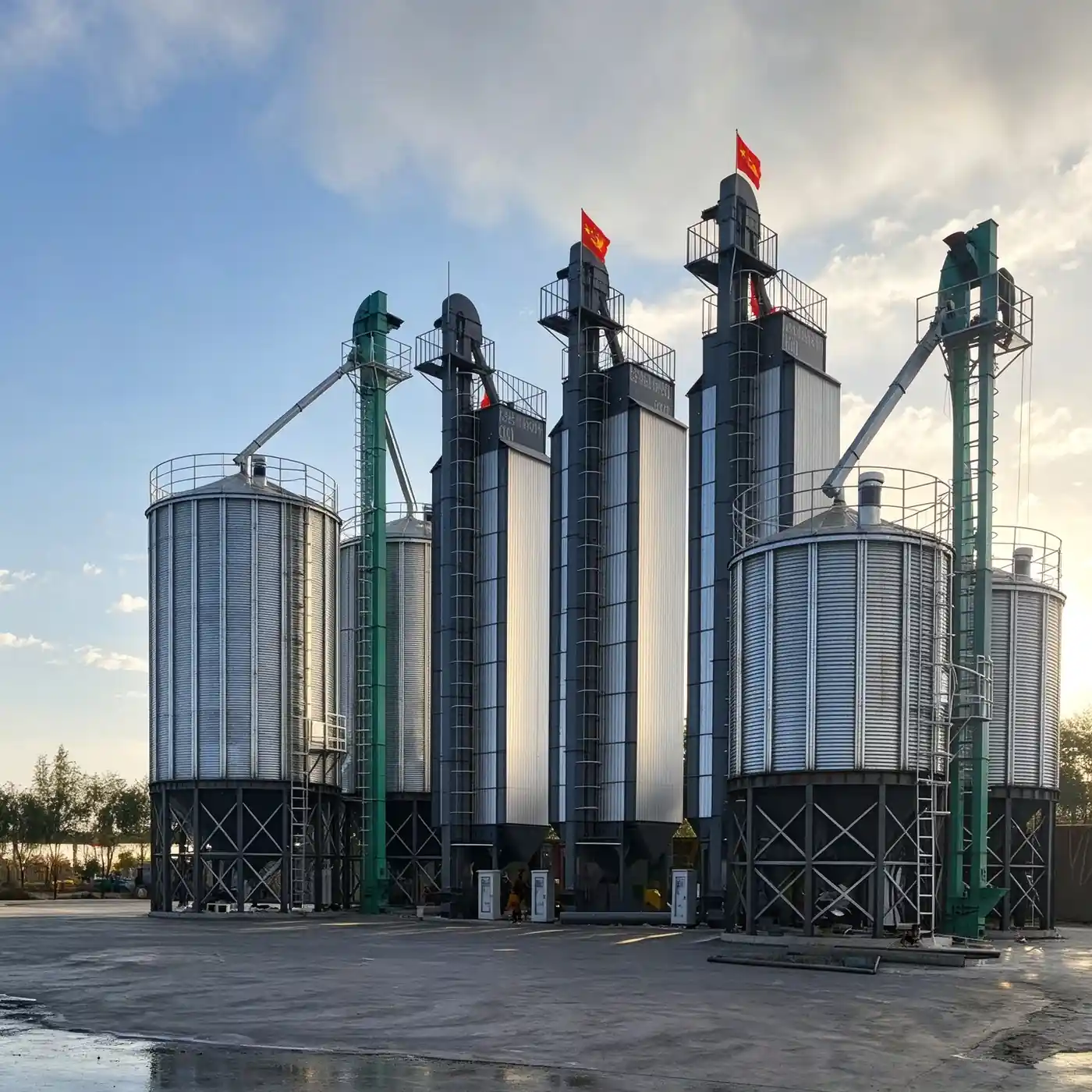
4. Example: A 900-Ton Grain Storage Project in Gansu, China
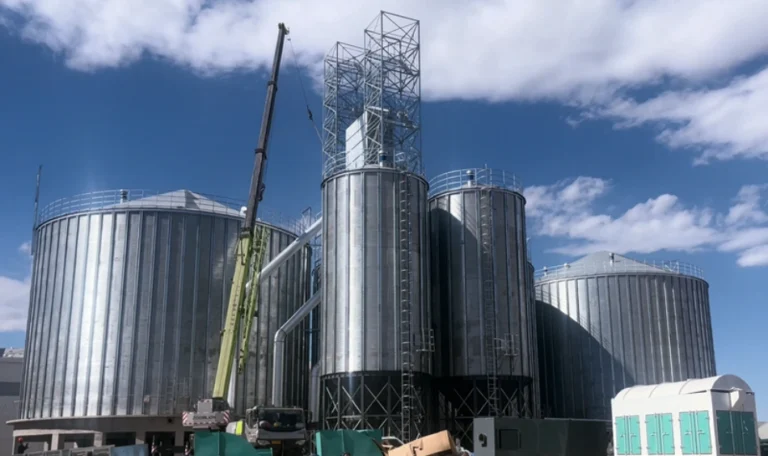
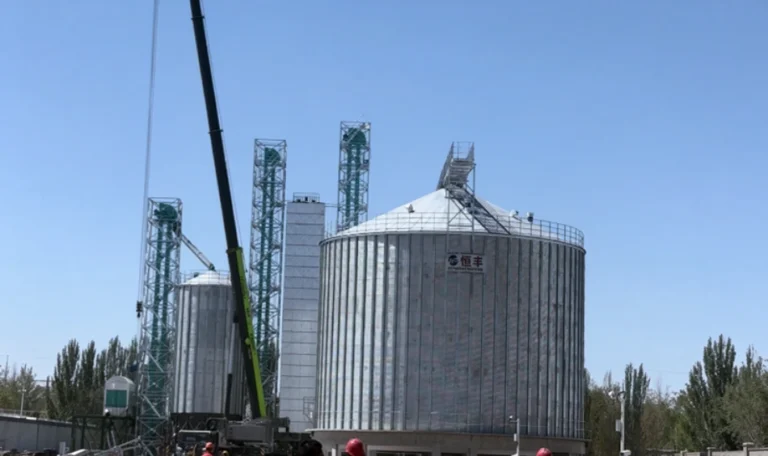
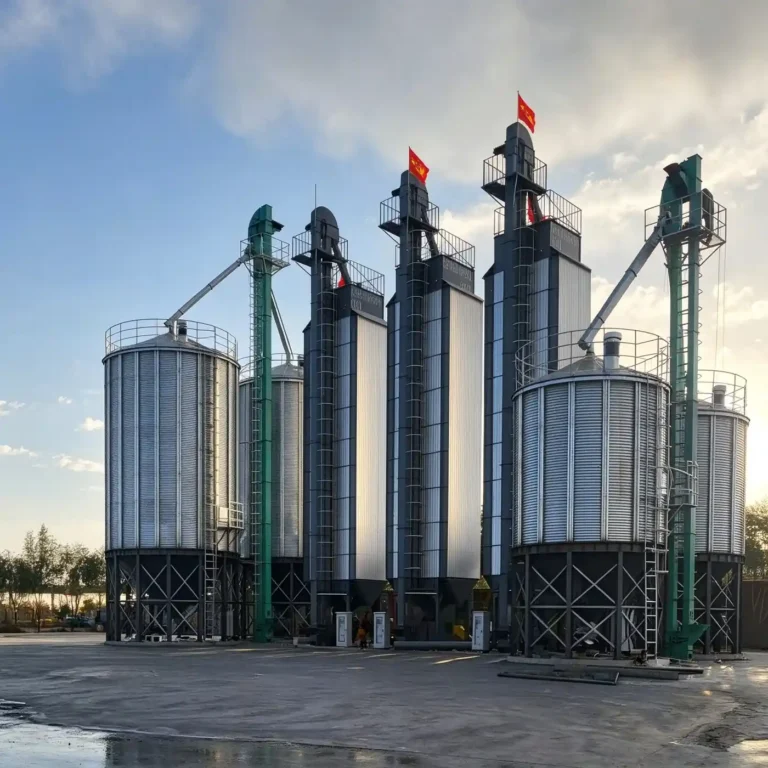
In 2025, a grain storage project in Gansu Province, China, used a combination of steel silos and grain processing equipment.
The project includes:
- Two 300-ton steel silos.
- Two 150-ton steel silos.
- A total nominal storage capacity of 900 tons.
- A cylindrical grain pre-cleaner.
- A grain drying tower.
- Bucket elevators.
- Belt conveyors.
- Scraper conveyors.
The different silo capacities provide storage options for different inventory volumes, while the supporting equipment addresses grain cleaning, drying, lifting, and transportation requirements.
This example illustrates why grain storage projects should be planned around the complete process rather than silo capacity alone.
5. How to Match Equipment Capacity
One of the most important design considerations is the relationship between equipment capacities.
For example, if the receiving system processes grain faster than the downstream drying or conveying equipment can handle, grain may accumulate at transfer points.
Similarly, a large drying tower does not automatically guarantee high overall throughput if the elevators, conveyors, or discharge equipment become bottlenecks.
Before selecting equipment, evaluate:
- Peak grain receiving rate.
- Required pre-cleaning throughput.
- Initial and target grain moisture content.
- Drying capacity under the specified operating conditions.
- Elevator and conveyor rated capacities.
- Required storage capacity and silo filling arrangements.
- Daily operating hours and expected seasonal demand.
The complete process should be assessed as one system, with suitable capacity coordination and control logic.
6. What Should Buyers Consider When Selecting a Supplier?
For an integrated grain storage project, buyers should look beyond individual equipment prices.
Important considerations include:
- System compatibility: Can the storage, cleaning, drying, and conveying equipment work together within the proposed process?
- Engineering and layout: Are equipment dimensions, transfer points, access routes, and maintenance requirements properly considered?
- Grain-specific design: Are cleaning and drying parameters appropriate for the intended grain and its moisture characteristics?
- Automation and controls: Can the system be operated and monitored in a way that suits the facility’s operating requirements?
- Installation and commissioning: Does the proposed supply scope clearly identify the responsibilities for installation, testing, and handover?
- Technical support: Are equipment specifications, maintenance instructions, and operating guidance available?
A well-prepared technical proposal should explain the process flow, equipment configuration, rated capacities, utility requirements, and project scope.
Conclusion
Steel silos, grain pre-cleaners, drying towers, bucket elevators, belt conveyors, and scraper conveyors perform different but complementary functions within a grain handling facility.
When these components are selected and coordinated correctly, they can support more organized grain processing and storage operations.
The 2025 Gansu project, featuring four steel silos with a total nominal capacity of 900 tons and a range of supporting grain handling equipment, illustrates this integrated approach.
Looking for a complete grain storage and drying solution?
Share your grain type, required storage capacity, initial moisture content, target moisture content, daily processing capacity, and project location with our team to discuss a suitable system configuration.
Click to view the machine test video: https://youtube.com/shorts/W6mwc7MDGoI