1. Project Overview
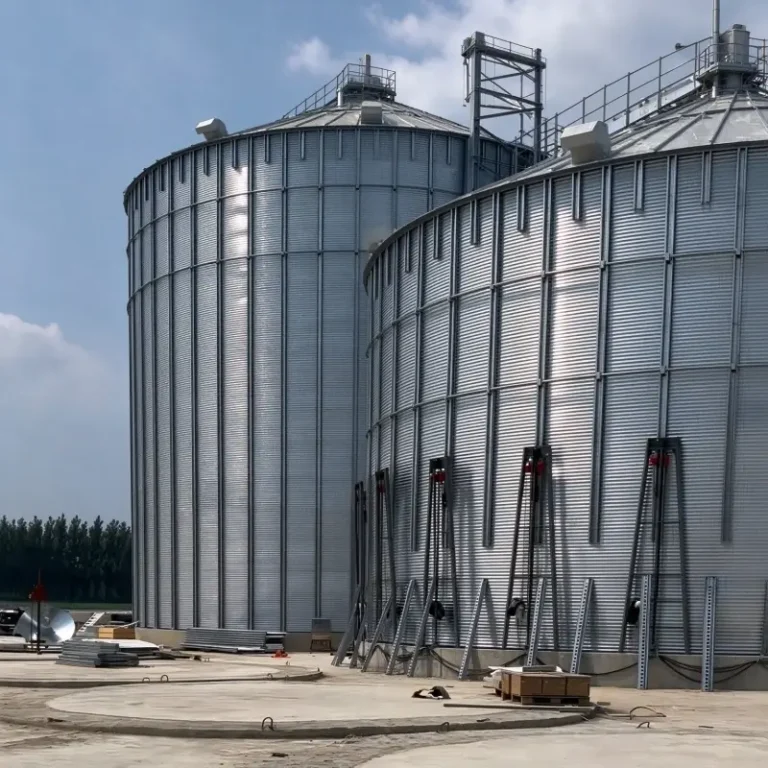
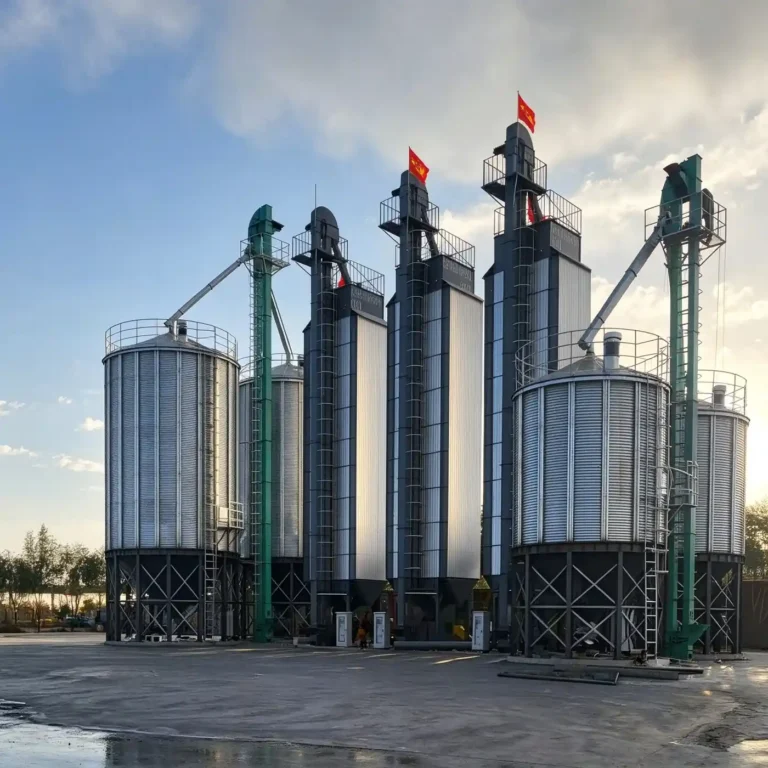
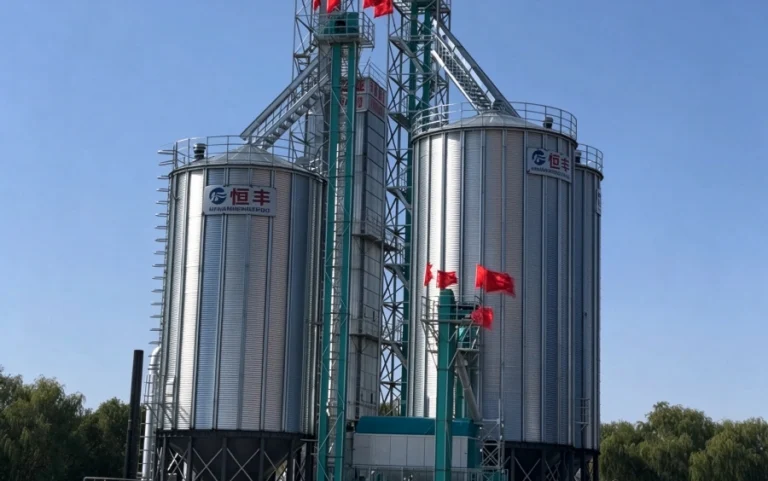
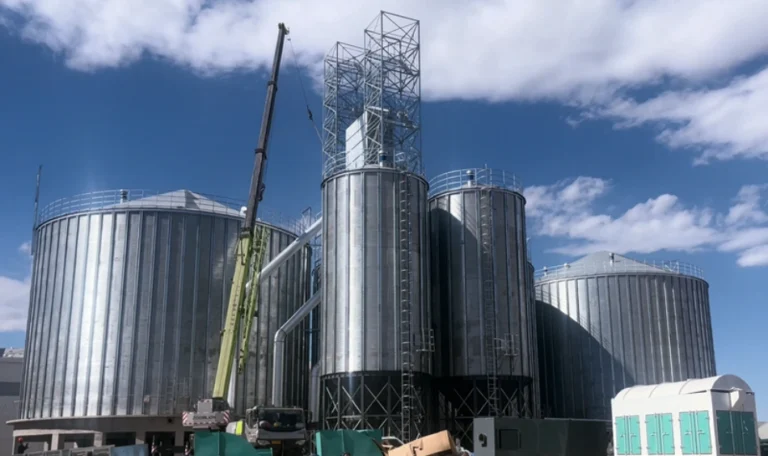
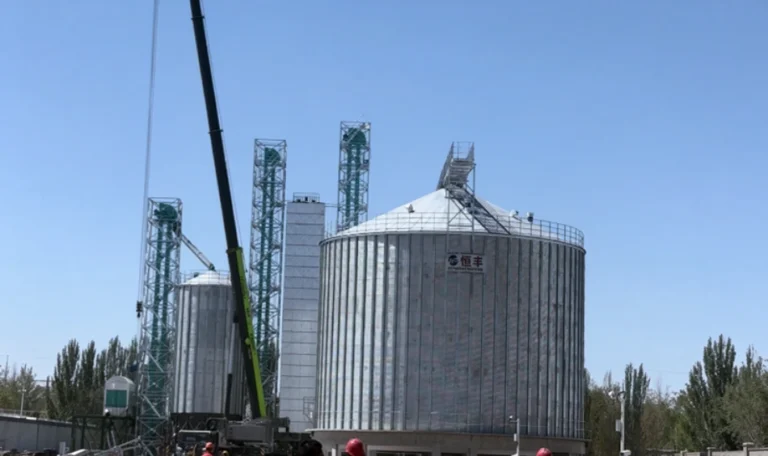
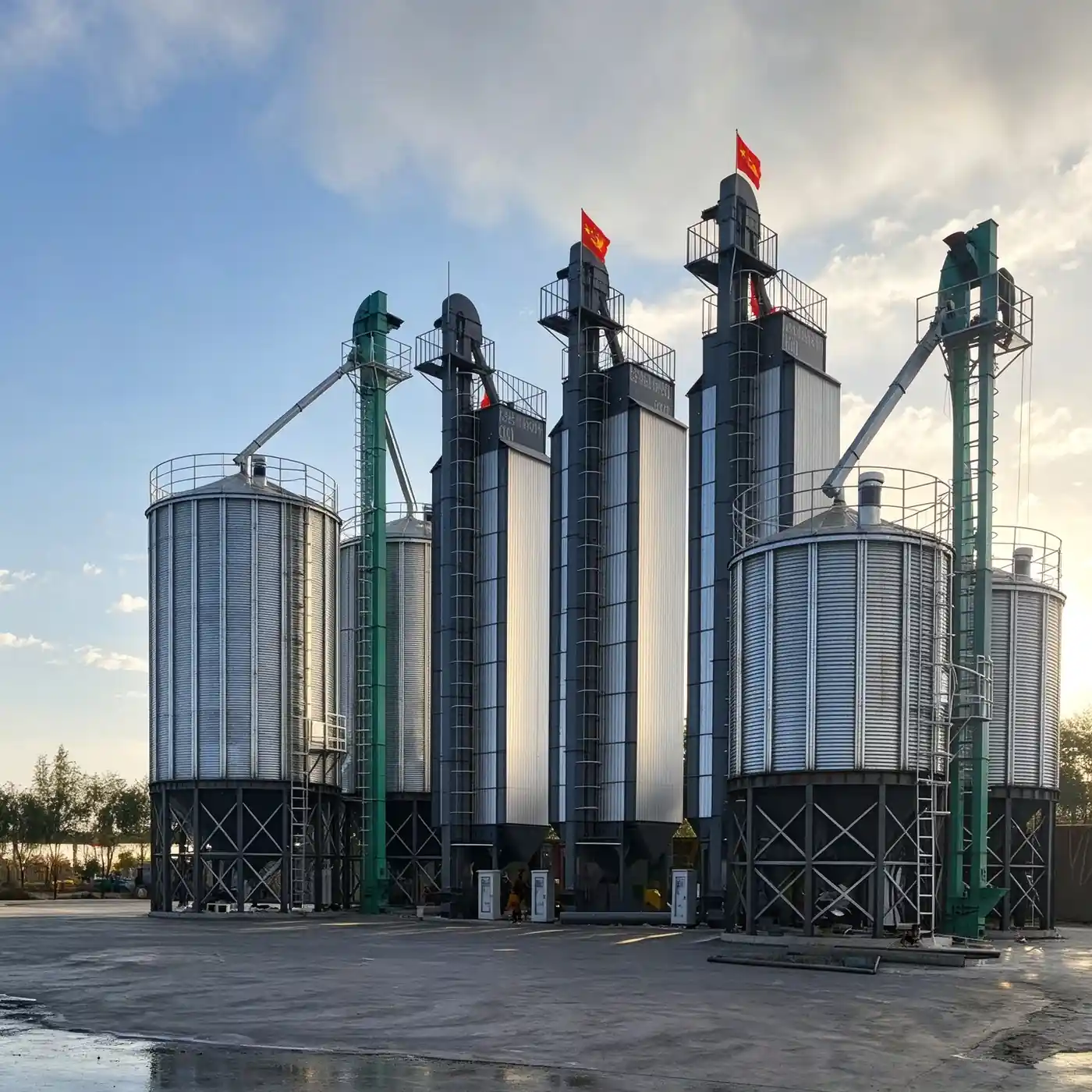
In 2025, a grain storage and handling project was implemented in Gansu Province, China, featuring four steel silos with a combined nominal storage capacity of 900 tons.
The silo configuration consists of two 300-ton steel silos and two 150-ton steel silos. The facility is equipped with a cylindrical grain pre-cleaner, a grain drying tower, bucket elevators, belt conveyors, and scraper conveyors.
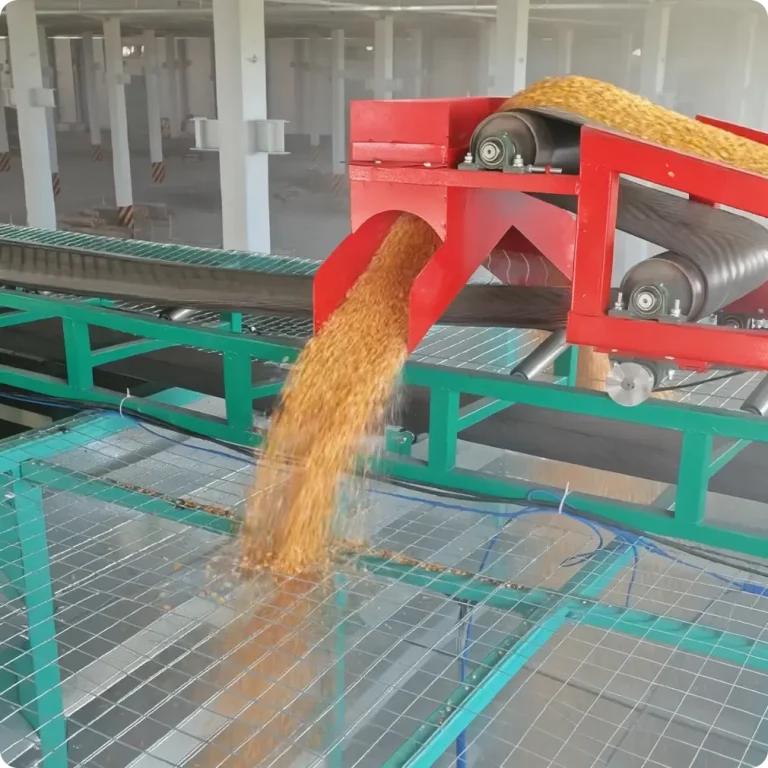
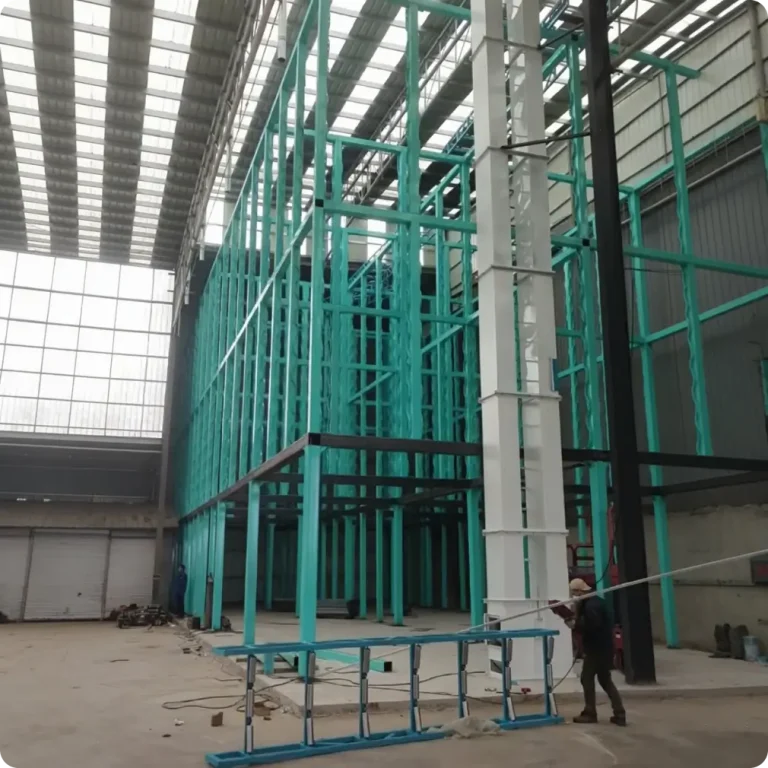
By combining grain storage with cleaning, drying, lifting, and conveying equipment, the project brings multiple grain handling functions together within one facility.
This integrated configuration provides a practical solution for grain storage operations that require both storage capacity and supporting grain processing equipment.
2. Project Configuration
The 2025 grain storage project in Gansu Province, China, features four steel silos with a total nominal storage capacity of 900 tons, together with an integrated grain receiving, cleaning, drying, conveying, and storage system.
The project includes:
- 2 × 300-ton steel silos
- 2 × 150-ton steel silos
- A hydraulic truck unloading platform (truck tippler)
- A cylindrical grain pre-cleaner
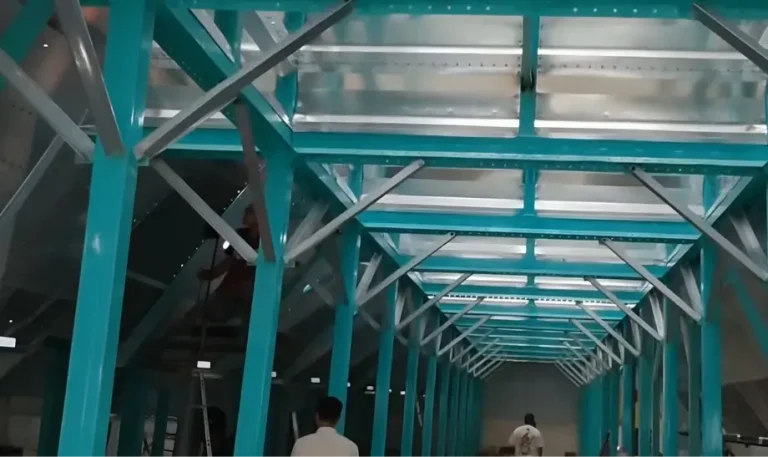
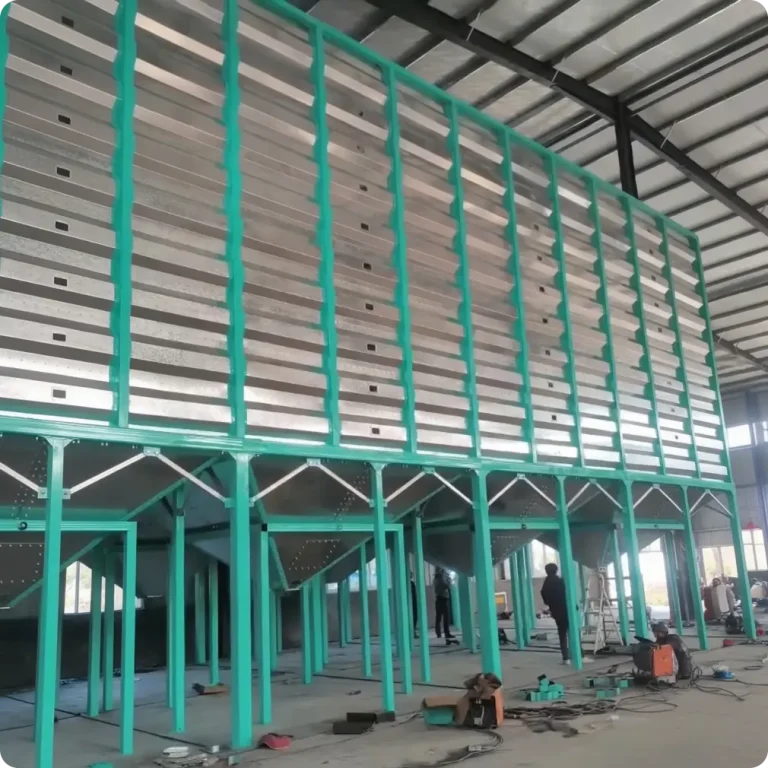
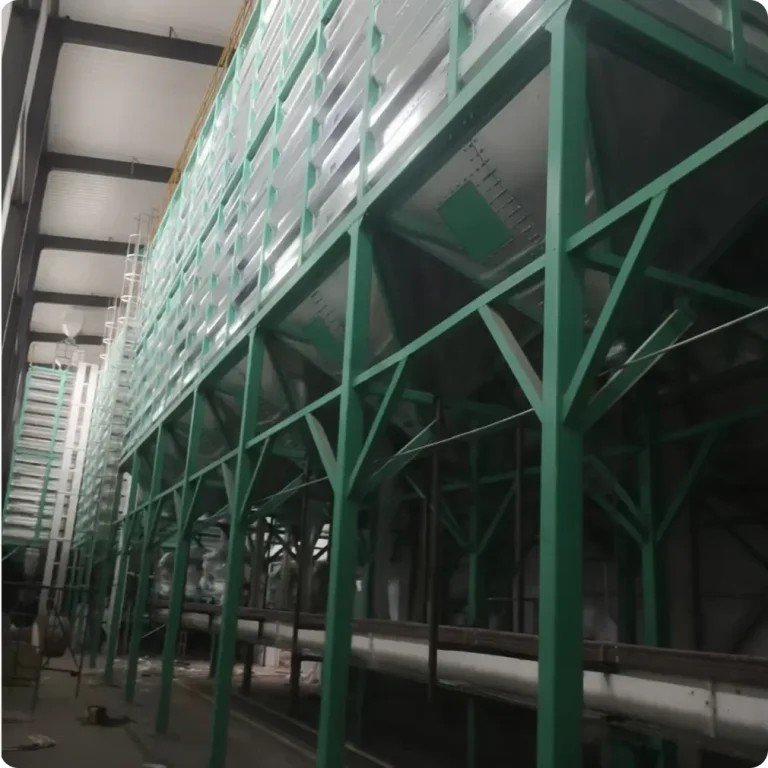
- A grain drying tower
- Bucket elevators
- Belt conveyors
- Scraper conveyors
The four steel silos provide a combined nominal storage capacity of 900 tons.
The truck unloading platform supports grain receiving by allowing compatible grain transport trucks to unload their loads at the designated receiving point. The grain is then transferred through the configured conveying system to the relevant cleaning, drying, and storage equipment.
The cylindrical grain pre-cleaner, grain drying tower, elevators, and conveyors perform complementary functions throughout the grain handling process.
The exact equipment quantities, rated capacities, and operating sequence should be confirmed against the final project documentation.
3. Project Requirements and Engineering Considerations
Grain storage facilities often need to coordinate several operations, including grain receiving, preliminary cleaning, drying, transportation, and storage.
When these functions are handled by separate or poorly coordinated equipment, material transfer can become more complicated, and operators may need to manage additional handling steps.
An integrated grain handling layout helps address these coordination requirements.
Storage Capacity and Flexibility
The combination of two 300-ton silos and two 150-ton silos provides 900 tons of nominal storage capacity across four storage units.
Using different silo capacities can offer flexibility when allocating storage space according to grain quantities and operating schedules.
Grain Cleaning and Drying
The cylindrical grain pre-cleaner is intended to remove suitable impurities before subsequent processing, while the grain drying tower supports moisture reduction when required.
The appropriate cleaning and drying settings depend on grain type, initial moisture content, target moisture content, and processing throughput.
Coordinated Grain Conveying
Bucket elevators, belt conveyors, and scraper conveyors perform different material handling functions.
Bucket elevators provide vertical grain transportation, while belt and scraper conveyors can transfer grain between equipment and designated process points.
Their capacities and operating sequences should be coordinated with the receiving, cleaning, drying, and storage requirements of the facility.
4. How the Integrated System Supports Grain Handling
The combination of steel silos and grain processing equipment provides several potential operational advantages.
- Integrated equipment layout: Storage, cleaning, drying, and conveying equipment can be planned as parts of a coordinated facility.
- Flexible storage allocation: Four silos with two different capacities allow the operator to allocate storage space according to operational requirements.
- More organized material transfer: Appropriate conveyor and elevator arrangements can reduce unnecessary intermediate handling steps.
- Support for grain quality management: Preliminary cleaning and controlled drying can help prepare grain for storage, provided that operating conditions are correctly selected.
These benefits describe the functions of the equipment and the potential value of integrated system design. Quantified improvements in labor, processing capacity, grain loss, or energy consumption require actual operating data.
5. Why Choose an Integrated Grain Storage Solution?
Selecting a grain storage system involves more than determining silo capacity.
The complete design should consider the characteristics of the grain, receiving throughput, cleaning requirements, drying conditions, conveying distances, storage capacity, and the available site space.
Coordinating these factors during the design stage helps ensure that the different components are suitable for the intended process.
For customers planning a new grain storage or handling facility, an integrated equipment solution can simplify system planning and provide a clearer framework for installation and operation.
6. Conclusion
The 2025 Gansu project combines four steel silos with a total nominal capacity of 900 tons and a supporting grain processing and conveying system.
With two 300-ton silos, two 150-ton silos, a cylindrical grain pre-cleaner, a grain drying tower, bucket elevators, belt conveyors, and scraper conveyors, the project demonstrates an integrated approach to grain storage and handling.
For agricultural businesses, grain storage operators, and grain processing facilities, the appropriate combination of storage and processing equipment should be selected according to actual grain characteristics, throughput requirements, and site conditions.
Planning a grain storage and drying project?
Contact our team to discuss your required silo capacity, grain type, drying requirements, conveying capacity, and installation location. We can help you evaluate a suitable steel silo and grain handling configuration.
Click to view the machine test video:https://youtube.com/shorts/W6mwc7MDGoI